The base cost is not the number that decides whether a print on demand product pays. Shipping is. Search for best print on demand products to sell and every list argues about demand; not one of them argues about what is left. I spent my first month picking the products that looked cheapest to make, then watched shipping eat the difference on half of them.
The supplier says it plainly, just past the calculator: shipping is not included in the product price at all, and it depends on factors you do not get to choose.
Quick answer, in the order it matters:
- Base cost covers less than you think: the item plus one standard print, nothing else.
- Shipping is a separate number you cannot see from a product page, and it scales with weight and volume.
- Products that still pay are light, flat, printed once, and bought in pairs.
- Products where the margin disappears are heavy, bulky, embroidered, or printed on more than one panel.
- Your markup is not profit: the supplier itself recommends at least a third of the base price just to cover costs that have nothing to do with the supplier.
- The design is the only part of the margin you control, which is why the licence on it matters more than where you picked it up.
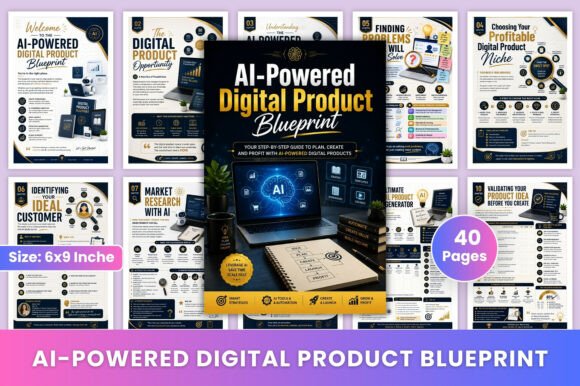
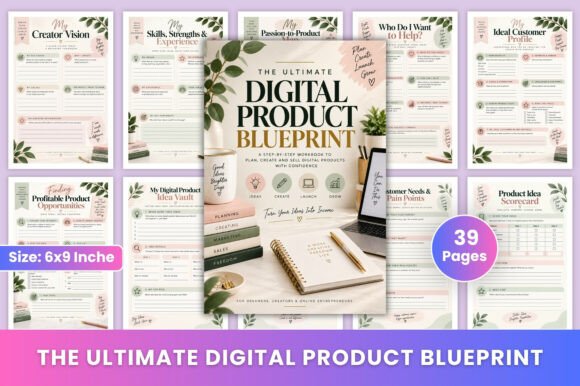
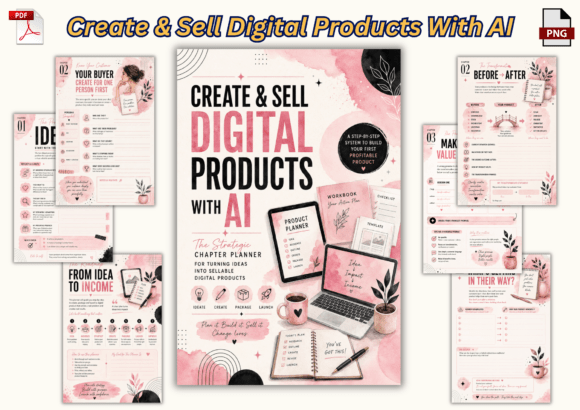
One thing before the list. The only part of a print on demand product you control is the artwork, so a commercially licensed design library is the lever worth having before you pick a single blank.
Print on Demand Products Are Rented Manufacturing, Not a Catalogue
A print on demand product is a blank item someone else holds, prints when your order arrives, and ships straight to your buyer. You never touch it. You never pay for it until it sells.
That is the part everyone already knows. Here is the part that changes how you choose:
- You are not buying a product. You are renting a manufacturing slot and a shipping label.
- The blank is the cheap part. The print, the packaging and the journey are the expensive part.
- You do not control the expensive part. The supplier sets it, and it moves with the item you chose.
So “which print on demand products sell best” is the wrong first question. Demand tells you whether someone will click. It tells you nothing about whether the sale is worth having.
Three things get called print on demand and behave differently. Worth separating before you open a catalogue:
- Print on demand: a blank gets your artwork printed on it, per order.
- Dropshipping: a finished product ships from a warehouse, your artwork is not involved.
- Digital files: nothing physical moves, so no base cost and no shipping at all. If that sounds like the easier business, it has its own honest test in digital products to sell online.
I mention the third because sellers talk about physical items almost twice as often as digital ones, 824 mentions against 417 across seller discussion on the subject. The attention sits on the harder business. That is worth knowing before you assume physical is the obvious starting point, and it is why I keep a separate shortlist of digital products to sell alongside the printed ones.
Pro tip: open your supplier’s shipping page before the product catalogue, not after.
If your question is what goes on the blank rather than which blank to use, a commercial-use clipart bundle costs less than a custom illustration and arrives licensed.
The Number Nobody Puts in the Article: What Is Left After the Base Cost
Here is what I do now before I even look at a design. I write down every number that stands between the buyer paying and me keeping anything.
There are five, and only one of them is the base cost:
- Base cost: the item and one standard print. That is the whole of what it covers.
- Print surcharges: large prints and embroidery cost extra on top of the base price. They are not rolled in.
- Shipping: not included in the product price, calculated separately, moved by factors you do not set.
- Marketplace fees: three per sale, not one. A listing fee when the item sells, a transaction fee on the full amount the buyer paid including shipping and gift wrapping, and a payment processing fee that changes by country.
- Tax: worked out from the product plus where it shipped from plus where it shipped to. The same product gives you a different remainder on two different orders.
That last one surprised me more than anything else in my first month. I had assumed a product has a margin. It does not. An order has a margin, and the product is only one of its three inputs.
The supplier is honest about the size of the gap. It recommends adding a profit margin of at least a third of the base price, and it says plainly what that third is for: listing fees, the monthly cost of running a shop, and paid advertising. Not profit. Costs that have nothing to do with the supplier.
Base cost buys the item and one standard print. Shipping, print surcharges, three marketplace fees and tax are all charged after it, and every one of them is sized by the product you picked.
Read that again as a seller rather than as a shopper. The number the supplier calls “profit margin” is the number that gets you back to zero.
This is the part the calculator does not show you, and it is the reason the question “what is left” has no answer on any of the big product lists. The lists are written from the supplier side. The remainder lives on the order side.
The one line you can move in that list is the price the design justifies, which is what a commercial-use font and graphics bundle is for.
In the seller conversations I pull from, only 351 posts out of 5,900 named a single real number about their own shop, views, sales or listing count. That is 5.9%. Nineteen out of twenty people discussing this business describe it without one figure of their own. So the absence of this number in the articles is not an oversight. Almost nobody has it.
Why Shipping Decides More Than the Product Does
Shipping is not a flat fee bolted on at the end. It is a function of what you chose to print on, and it is the single most predictive thing about whether a product survives.
The mechanic is physical, which is why it is reliable:
- Each print needs its own packaging and handling. Extra prints add weight and volume, and the shipping cost rises with them.
- Weight and volume are properties of the blank, not of your design or your pricing.
- So the blank sets the shipping, and the shipping sets the remainder.
But there is a second half to that rule, and it is the useful half. The extra shipping fee per additional print in the same order is significantly lower than shipping each print separately. One order with two items always gets a better rate than two orders with one item each.
Therefore the product choice and the listing strategy are the same decision. A product that naturally gets bought in pairs, a set, a two-pack, a matching pair for a couple, carries its shipping better than an identical product bought alone. Not because the item changed. Because the second one rides cheaper.
What I changed after learning this:
- I stopped listing single items only. Every product that can honestly be a pair gets a pair listing. In practice that is a listing variant, not a second product: one listing, a “single” option and a “set of two” option, and the supplier integration maps the set to two units in the same order. The buyer picks it, the second unit ships at the lower rate, and you did not have to design anything new.
- I stopped treating heavy items as “premium”. They are not premium, they are expensive to move.
- I started reading the blank’s weight before its base cost.
Pro tip: if you can only check one spec on a blank, check weight, not price.
Flat and light also means stickers and cards, where a sticker and card design set turns one design into several listings.
Print on Demand Products That Still Pay
These are the categories where the remainder survives the journey. The common thread is not demand. It is physics: light, flat, printed once, plausibly bought in twos.
- Flat paper goods: art prints, posters unframed, greeting cards, stickers. Light, flat, one print, and they stack in one envelope. The same artwork often sells again as digital downloads to sell on Etsy with no shipping at all.
- Single-panel apparel: a standard tee or sweatshirt with one front print and nothing on the back or sleeve. The moment you add a second placement you have added packaging and handling. What survives the printer is its own topic, covered in print on demand tshirt designs.
- Small accessories: tote bags, pouches, pin and patch style items. Low weight, low volume, and they sit naturally in a set.
- Pet items: bandanas and small soft goods. The buyer is emotionally committed and the item is light, which is a rare combination.
- Stationery: notebooks with a printed cover rather than printed interiors, cards, notepads. One print, flat, cheap to move.
What those five have in common is that they do not punish you for being right. If the design lands, the remainder is still there.
Each of those five wants artwork sized for one print area, which is what a poster and wall art collection already gives you.
Before you read the next part as a shopping list, the honest caveat: none of these guarantees a sale. They guarantee that a sale is worth making. Demand is still your job, and it is still the harder half.
Products Where the Margin Disappears
I have lost money on half the rows of the table below. The products sold perfectly well. They sold and then left nothing.
The decision table I use now. Read the middle column first, it is the one the product lists leave out:
| Product type | What eats the remainder | When it still pays |
|---|---|---|
| Mugs and drinkware | Heavy, bulky, fragile, so weight and volume are both against you | Only as the second item in a pair order, never as the lone product |
| Embroidered hats and apparel | Embroidery is charged on top of the base price as a surcharge | When the buyer is paying for the embroidery itself, not for the design |
| All-over print and multi-panel apparel | Large prints carry extra cost, and each print adds its own handling | Rarely, and only where the print is the entire reason for the purchase |
| Framed prints and canvas | Volume, protective packaging, and breakage replacement | When the frame is the product and the price reflects that |
| Blankets and large home textiles | Weight, and a large print surcharge on the same item | When one sale replaces three smaller ones and you priced for it |
| Phone cases | Model fragmentation, so inventory of designs multiplies with no extra demand | When one model dominates your audience and you list only that one |
Notice what is not in that table: a verdict on whether anyone wants the product. Mugs are wanted. Blankets are wanted. That was never the problem.
The fix, where the product genuinely has to exist in your shop:
- Pair it. Put the heavy item in a listing with a light one so the second item rides at the lower rate.
- Drop the second print. One placement instead of two removes a whole packaging and handling step.
- Price it as its own category, not at your shop’s normal markup. A heavy product with a light product’s markup is a donation.
- Or do not list it. This is the option I use most, and it took me longest to accept.
Dropping the second print is easier when the design was drawn as one, which is why I buy from a single-placement shirt design set rather than adapt.
Where to Sell Print on Demand Products, Including for Free
“Where to sell print on demand products for free” is one of the most common things typed into search on this topic, and the answer is genuinely yes, but the free part moves rather than disappears.
Your three real options:
- An existing marketplace. Free to open, free to browse, and then three fees on every sale: listing, transaction on the full amount the buyer paid, and payment processing that varies by country. You pay nothing to start and something on everything that works. The listing mechanics are the same ones in how to sell printables on Etsy.
- Your own storefront on a free plan. Several platforms have a free plan available, and the supplier integration usually comes with it. No fee per sale from the store, but no traffic either, so the cost moves to your attention.
- Printing platform marketplaces. The supplier lists your design on its own shop. Lowest effort, lowest control, thinnest remainder.
A detail that matters once you have run both: the marketplace transaction fee applies to the total the buyer pays, which includes shipping and gift wrapping. So on a marketplace, offering free shipping does not make shipping free. It moves shipping into the item price and then charges you a fee on it.
What I would tell someone starting this week:
- Start on the marketplace, because the traffic exists and you need to learn which of your designs anyone wants.
- Open the free-plan storefront in parallel and point your own audience there.
- Only consolidate once one of the two is clearly carrying the shop.
Both routes need the same thing from you, a design you are allowed to sell, so the sublimation set with a commercial licence travels with you between them.
The Design Keeps the Margin, the License Keeps the Design
Everything above is fixed by someone else. The blank, the print surcharge, the shipping, the fees, the tax. You get one input: the design.
Which means the design is where the remainder is actually made. Two sellers can list the same single-print tee on the same marketplace at the same base cost, and the one whose design is specific to a real person wins a higher price with an identical cost structure. Sellers who have run both will tell you the same thing: it is not the item, it is the niche and the artwork on it.
And this is where a quiet mistake costs people their shop. A “personal use” licence applies to non-commercial use only, which means anything not intended to make money. Selling a printed item is intended to make money. A commercial licence is required when the asset is used for any commercial project, and labels on products sold in shops are named in that category directly.
So the rule is short:
- Free font or graphic with a personal licence: fine for your own wall, not for a listing.
- Commercial licence: required the moment the item is for sale, whether it sells or not.
- Check per asset, not per bundle, because a bundle can mix licences. The same rule applies when you are creating digital products to sell from bought elements.
Here is the doubt I had, and the reason I changed how I source. I was afraid the product I picked off someone else’s list would leave nothing after shipping and fees, and that I could not check it in advance.
The supplier does tell you, in its own documentation, that shipping sits outside the base price and that your markup should start at a third of it to cover other people’s costs. Once that is settled, the only lever left is whether the design is worth a higher price.
Which makes a commercially licensed design the cheapest margin you can buy.
What I use for this is a commercial-licence graphics and font library rather than hunting assets per listing. A free plan available to start, and the licence question answered once instead of every time I open a new design.
Three files I come back to, all single-print friendly and all flat enough that the shipping maths above still works:


How to Price Print on Demand Products Without Guessing
No formula here, because a formula needs numbers I cannot know about your shop. An order, instead. This is the sequence I run on every new product before it gets a listing.
- Find the base cost of the exact blank, in the exact colour and size you intend to sell. Colour and size move it.
- Add every print surcharge. Large print, second placement, embroidery. If you are not sure whether your placement counts as large, assume it does.
- Pull a real shipping quote to the country most of your buyers will be in, for one unit. Not an average, not an estimate from a blog.
- Pull the same quote for two units, because the difference between those two numbers is your pair strategy.
- Add the marketplace’s three fees, remembering the transaction fee is charged on the total the buyer pays, shipping included.
- Add at least a third of the base price on top, as the supplier recommends, and label it what it is: cover for listing fees, shop subscription and advertising.
- Now look at the number you would have to charge. If a buyer would not pay it for your design, the problem is the product, not the price. The same arithmetic, applied to a whole shop rather than one listing, is in passive income ideas for beginners.
Step seven is the whole point. Before any of it, run the honest test in the honest test before you build anything.
Pricing does not rescue a bad product choice. It only tells you, before you spend a week on artwork, that you made one.
The one cost in that list you can shop around is the artwork, and a bundle with a commercial licence keeps it predictable.
Before you publish, confirm:
- You priced the exact variant, not the cheapest one in the range.
- You have a real shipping quote, for one unit and for two.
- Your markup starts above a third of the base price, not at it.
- Every print placement in the mockup exists in the price.
- Every graphic and font in the design carries a commercial licence.
- You know what the buyer gets if the print arrives wrong.
The First Thirty Days, Honestly
Not a launch plan. A warranty window, and it is worth knowing before your first complaint rather than during it.
What the supplier covers:
- Manufacturing faults and print errors: once the claim is approved, the supplier covers the full cost of making and shipping the replacement.
- The window is thirty days from delivery. After that it closes, and the cost moves to you.
What the supplier does not cover, and this is the sentence I wish I had read first: because garments are printed on demand and made for that specific order, returns for the wrong size or a change of mind are not accepted at all.
So the refund policy of a print on demand shop is not a policy decision. It is a consequence of the manufacturing model. Which gives you three practical jobs:
- Put the size chart in the listing, not in a linked page. Wrong size is the complaint you cannot pass on.
- Photograph or describe the print placement exactly. “Not what I expected” is a change of mind, and it lands on you.
- Diarise the thirty days. A buyer who messages on day thirty-four is your cost, not the supplier’s.
Wrong size is also the one complaint a clear mockup prevents, and a size chart mockup set is the cheapest way to show one.
This is also the real argument against heavy and fragile products, stronger than the shipping one. A broken mug inside the window is replaced free. A broken mug outside it is a product you paid for twice. The refund side of a shop is laid out in files, delivery and the refund rules.
Where the First Buyer Comes From
Almost nowhere, is the honest answer, unless you build the route yourself.
In 5,900 seller conversations, an outside traffic source gets named in 165 of them. That is 2.8%. The breakdown is the interesting part: Instagram 71, Pinterest 51, TikTok 41, and an owned email list exactly zero. Meanwhile 96 posts describe paying the marketplace for ads instead.
Read that as a strategy document. Almost nobody brings their own traffic, and the few who do are on visual platforms. Nobody at all owns their audience. The default is to rent attention from the marketplace that already takes three fees per sale.
What I would do differently if I started again:
- Pick one visual platform and only one. The three named above are where the small amount of outside traffic actually comes from.
- Start the email list on day one, precisely because nobody does. It is the only audience the marketplace cannot reprice.
- Treat marketplace ads as rent, not growth. They stop the day you stop paying.
- Fix the shopfront before the traffic. Name, banner and first listing photo are covered in Etsy shop ideas.
And connect it back to the product choice, because it is the same decision again. A product that gets bought in pairs is worth more per visitor. If your traffic is scarce, and it will be, the remainder per order matters more than the number of listings.
Pro tip: the first channel you build is worth more than the next ten designs.
Those visual platforms want a steady stream of images, which is where a social template bundle saves the most time.
What This Does Not Solve
Being honest about the ceiling of everything above.
- It does not find demand. Every product in the “still pays” list can sit at zero sales forever if nobody wants the design on it.
- It does not survive a supplier change. Base costs, surcharges and shipping rates are theirs to move, and they do.
- It does not replace a plan for the shop. Where the passive part of this stops being true is set out in make money online.
- It does not fix a saturated design. If your artwork is interchangeable with a hundred others, the remainder stops mattering, because there is no sale to take it from.
- It does not cover international orders well. Tax depends on the product, the origin and the destination, so a product that works at home can fail abroad with nothing changed.
- It will not make a heavy product light. Pairing and repricing help. Physics does not negotiate.
What it does fix is the one input you own, and a commercially licensed design bundle is how you keep that input cheap.
Who this is wrong for: if you want one product, listed once, and left alone, print on demand is a poor fit. The model rewards whoever keeps testing designs on the same handful of safe blanks. That is the actual work, and the product list only stops you doing it on the wrong blanks. If the hours matter more to you than the model, compare it against side hustle ideas by hours per week first.

Print on Demand Products FAQ
What does print on demand products mean?
It means blank items a supplier prints and ships for you, one order at a time, with your artwork on them. You pay after the sale, not before, and you never hold stock.
What are the best selling print on demand products?
Apparel, drinkware and wall art move the most units. Units and remainder are not the same thing though, so check the weight and the print count before you copy that order.
What are the best print on demand products for Etsy?
Flat, light, single-print items: art prints, cards, stickers, single-placement tees and small accessories. They suit a marketplace that charges a fee on the full amount the buyer pays, shipping included.
For that shortlist the artwork matters more than the blank, so start from a single-print design bundle.
Can you sell print on demand products on Etsy?
Yes, and most suppliers connect to it directly. Your shop has to declare that a production partner is involved, which is a listing field rather than an obstacle.
Can you sell print on demand products on Amazon?
Yes, either through its own merch programme or by fulfilling orders from a supplier. The margin discipline is stricter there, so heavy items fail faster than on a smaller marketplace.
Can you sell print on demand products on eBay?
Yes, and several suppliers integrate with it. Treat the listing as a physical product with real shipping, because buyers there compare delivery cost more aggressively.
Can you sell print on demand products on TikTok Shop?
Yes, with a supplier integration or a connector. It rewards one strong design shown in motion, so a single-print item is the practical choice.
Whichever platform you pick, the artwork has to be licensed for resale, which is what a resale-licensed design bundle is for.
Can I sell print on demand products on Gumroad?
Gumroad is built for files rather than printed goods, so it fits digital versions of your artwork best. For printed items you want a storefront that talks to a supplier.
Can you sell print on demand products on Stan Store?
It is designed for digital offers and links rather than physical fulfilment. Use it to send an audience to the shop where the printed products actually live.
What is a print on demand store?
A storefront of your own, connected to a supplier, where each order triggers production. You own the pages and the audience, and you bring the traffic yourself.
Is print on demand digital products or physical ones?
Physical. The artwork is a digital file, but what the buyer receives is a printed object with a base cost and a shipping cost attached. The file-only version of the same shop is digital products to sell on Etsy.
How to sell print on demand products online?
Pick one light, single-print product, put a design on it that a specific group of people wants, list it where traffic already exists, and price it with real shipping quotes in front of you.
How to create print on demand products?
Choose the blank first, then design to its single print area, then upload and order one sample. Most sellers start from a ready print on demand design bundle rather than a blank canvas.
Designing before you know the print area is how a design becomes two placements by accident.
How to do print on demand on Shopify?
Install a supplier app, connect it to the store, and let it publish the products with your artwork. The store handles checkout, the supplier handles printing and shipping.
How to market print on demand products?
Through visual platforms, because that is where the small amount of outside traffic in this business actually comes from. Instagram, Pinterest and TikTok are the three that sellers name, and the wider list of routes is in ways to make money online.
How to advertise print on demand products?
Marketplace ads are the fastest route and the one that stops the day you stop paying. Build one owned channel in parallel, because almost nobody in this business does.
All of the above assumes the artwork is yours to sell, which is what a commercial-use graphics bundle settles once instead of per listing.
What are the best print on demand baby products?
Bodysuits, bibs and small blankets printed once, in the smallest sizes. They are light, which is the only reason the category works, and they are bought in pairs more often than adult apparel.
What are the best print on demand kitchen products?
Tea towels and aprons rather than drinkware. Both are flat and light, while mugs carry weight, volume and breakage all at once.
Which print on demand products are worth starting with in 2026?
The same five that have always carried their shipping: flat paper goods, single-print apparel, small accessories, light pet items and printed-cover stationery.
Which print on demand products are most profitable after base cost and shipping?
Light, flat items printed in a single placement: art prints, greeting cards, stickers, single-print tees, small accessories and stationery with a printed cover. They win on the shipping side rather than the demand side, because weight and volume drive the shipping cost and each extra print adds its own packaging and handling.
What print on demand products sell best?
Apparel and drinkware sell in the highest volume, which is why every list leads with them. Volume and remainder are different questions though, and drinkware is one of the weakest products on the second one. Sell what sells, but price it with the shipping in front of you.
Is print on demand worth it at all?
It is worth it if you treat the design as the product and the blank as logistics. It is not worth it if you expect the blank to carry the business, because the supplier controls every number attached to the blank and recommends a markup of at least a third of the base price just to cover costs outside its own.
If you want the shortest version: pick a light blank, then put a design on it from a commercially licensed design set so the licence is never the thing that stops a listing.
Which print on demand products should a beginner avoid?
Anything heavy, bulky, fragile, embroidered, or printed on more than one panel. Embroidery and large prints carry surcharges on top of the base price, and fragile products expose you to replacement costs once the thirty-day window from delivery has closed.
How do I calculate the price before launching?
Price the exact variant, add every print surcharge, pull real shipping quotes for one unit and for two, add the marketplace’s three fees including the one charged on the total the buyer pays, then add at least a third of the base price for your own costs. If the resulting price looks unsellable, change the product rather than the margin.
Where can I sell print on demand products for free?
Marketplaces are free to open and charge three fees per sale, and several storefront platforms have a free plan available with supplier integration included. Free to start always means paid later, either as a fee on each sale or as the traffic you have to bring yourself.
Do I need a commercial licence for the designs?
Yes, from the moment the item is listed for sale. A personal-use licence covers only use not intended to make money, and a commercial licence is required for any commercial project, with product labels sold in shops named in that group directly.
One more time, because it is the only input you own: the design, under a licence that allows printed resale, is where the remainder is made.
Key Takeaways
- Base cost covers the item and one standard print, and nothing else that stands between the sale and your remainder.
- Shipping sits outside the product price and is driven by weight, volume and the number of prints, which makes the blank the real decision.
- A second item in the same order ships at a much lower rate than a second order, so pairable products carry their shipping better.
- Suppliers recommend a markup of at least a third of the base price, and describe it as cover for listing fees, shop subscriptions and advertising rather than as profit.
- Manufacturing faults are replaced in full inside a thirty-day window from delivery, while wrong size and change of mind are not returnable at all.
- A commercial licence is required the moment a design goes on a listing, because personal-use terms cover only use not intended to make money.
If one thing from this is worth acting on today, it is the input you control: a commercially licensed design library, bought once, under terms that let you sell what you print.